


My new friend and I swirled our spoons in fancy blue and white floral teacups and nibbled on homemade apple bundt cake at my dining room table. It would be the first and only time she would visit, not for any other reason than that both our lives were at a crossroads, and we would soon be taking our own paths. She was a former nun returning to secular life, and I was a new mom learning how to raise a human. We met at a women’s workshop at our church. Our stories were different, but we were both navigating a new world.
As we chatted, my two black labradors barked behind the glass porch door, interrupting us. I had kept them at bay due to their affinity for jumping, but they wanted to be part of the party. “Let them in. I love animals,” my new friend said. I unlocked the door, and they raced toward her. Her body looked relaxed as they sniffed and jumped. She spoke softly, and her gentle spirit quickly calmed them. She was a sage, and even the dogs knew it. With no further distractions, she shared about the classes she was taking for her new career in education. I shared that I was taking one year off from work to care for my three-year-old daughter after the hardest few years of my life.
My friend made me feel safe in a way that few others did at the time. Perhaps because there was no history, expectations, or weight of motherhood on her side. The moms I knew were overwhelmed with their own mothering and work lives. The vast majority were emotionally unavailable, as evidenced by my occasional passing comment that I was struggling, which went unacknowledged or received little to no follow-up.
I confided in her that there were actually more men in my life than women at the time, but I got trapped in their unsympathetic nets. I recounted three stories that had stuck with me. The first unfolded when a male visitor stopped by the week my daughter was born. We laughed and fawned over her, and I mentioned only a few sentences about the birth. “I’ll never forget it,” I then said. “Well, if you keep talking about it, you won’t,” he replied sharply. I was in a vulnerable place, as most postpartum women are, and it stung.
The second account happened when I mentioned to another man how tired I was. I was working full-time in management, up at night with a baby, and was dealing with traumatic extended family events that he was unaware of. “This is what you wanted, so you really can’t complain,” he said. I guessed this wouldn’t be the first or last time a woman who had experienced years of infertility issues like me heard this. Once your long-awaited baby arrives, some feel that expressing any mothering challenges is considered ingratitude. The third account occurred after I commented to a man about the difficulty of juggling so much. “Well, Jeremy and his wife have multiple kids and both work,” he countered.
In all three cases, none of the men had kids and couldn’t understand the magnitude of the responsibility. Perhaps they also felt uncomfortable and didn’t know how to respond. Or possibly the male’s need to fix, wired into their prefrontal cortex when someone’s in duress, made them incapable, at no fault of their own, of an emotional leap. Either way, my hope for understanding and empathy was sorely missed.
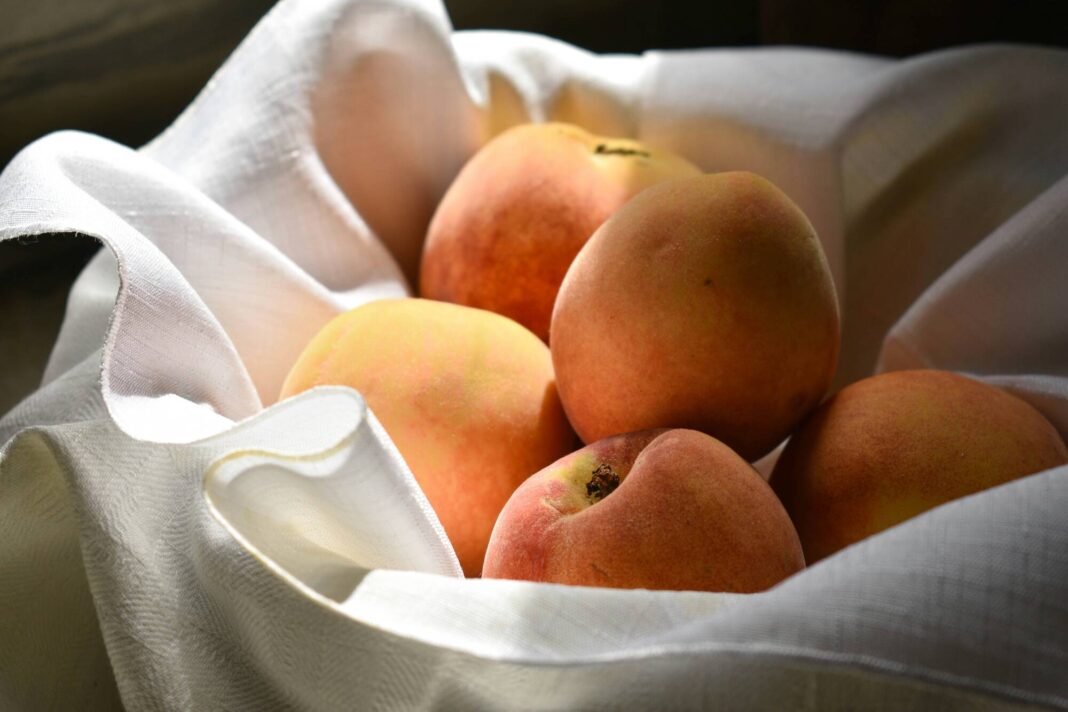
My friend listened intently and kindly, and despite not being a mom, I could tell she understood the hurt. Then she said something softly and wisely that changed my life: “Don’t go to the hardware store for peaches.”
With that one piece of wisdom, my approach shifted. I had expected proximity, familiarity, and some level of care for me to be sufficient criteria for empathy. It turns out that more boxes needed to be checked. Is this person capable of listening without giving advice? Do they have shared experiences, and if not, could they still relate in some peripheral way? Does emotion make them uncomfortable? Just because I’m familiar with the hardware store and pass it daily doesn’t mean I can also buy groceries there. It’s not fair to expect one person to be everything. It’s also my responsibility to prevent uninformed words from taking hold.
Moving forward, no matter how much I needed to share my experiences, I would choose more wisely whom I allowed into my maternal inner circle. And since the moms I knew were over-extended, the circle that helped me protect my peace included the therapist I started seeing just before my daughter turned two, a few women, and my journal.
Like any human, I still fall into the trap occasionally, and it hurts when someone doesn’t extend the care I hope for. But what hurts the most is the abandonment I feel from the lack of policies and support for mothers in the United States, and an expectation that we should do it all while showing up with a smile. Until change comes, I’ll live by my friend’s wisdom. And while I haven’t seen her in close to a decade, I will always tell people that one of my favorite pieces of mothering advice came from a nun.
Articles are for informational and self-help purposes only. Articles are not meant to provide specific advice for your specific situation. They should not be treated as a substitute for psychological, behavioral health, medical, financial, relationship, or career advice or as a substitute for consultation with a qualified professional. Nothing in any Article is intended as a recommendation or endorsement of any products, services, healthcare provider, opinions or other information.
The opinions expressed by the author and those providing comments are theirs alone and do not reflect the opinions of Mother’s Day Magazine. Mother’s Day Magazine is not responsible for the accuracy of the information supplied by the author. The Terms and Conditions are incorporated herein.